Thanks so much for your patience. It’s been over two weeks since I sent out my first post when I’d hoped to send another post before then. I’m not sure if my post selections will go out biweekly or bi-coastal or non-monthly—but I’ll figure that all out as I go. The writing of my next novel has resumed with a vengeance (that’s actually a part of the plot) and that’s taken my energy, too. Mostly it’s the newness of becoming a publisher like this and learning the ropes and the tropes and the tech of it. But here’s another post. Enjoy.
Yours,
David Krancher
Pudding Creek Haiku
Strings of sea weed and seal laughs mix into seven sea gull filled waves until fog hides our eyes from us.
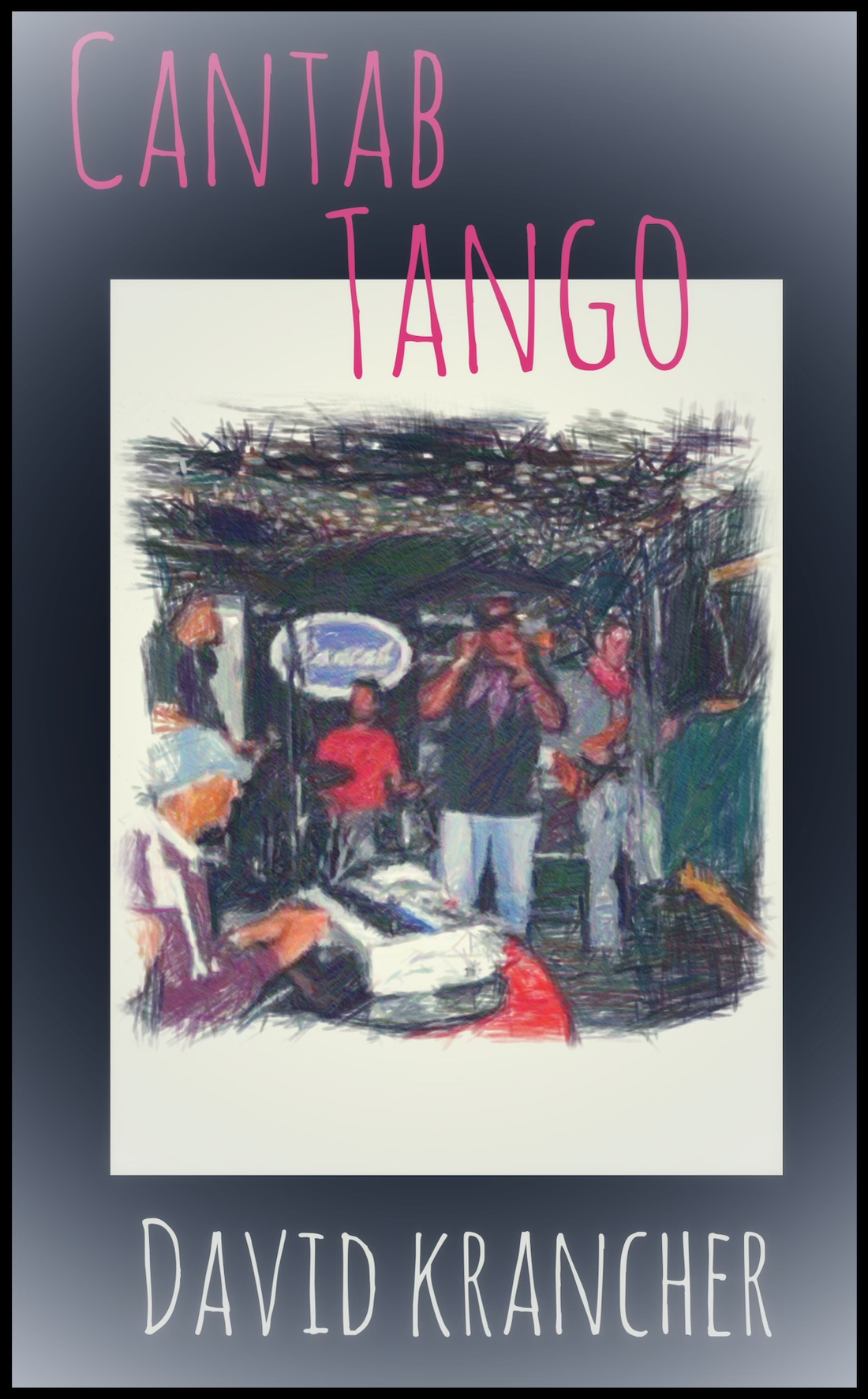
EXCERPT #2 from Cantab Tango
“Watch Tony show off for you,” I say to Satchmo, “while I’m jonesing for a fat spliff of ganja—or let’s call the whole thing off.”
Tony gives me a dirty look. Satchmo sighs.
“As a matter of fact,” Tony says, “it’d be best to stack a minor 6th chord on top of your tonic, then flat the fifth, and add a 13th over that—it’s so musically insane, it’s perfect. Especially since it becomes a great way to end it—so up in the air and unresolved, you know—like the lyrics imply.”
I answer by throwing my hands around like they explode from a bomb.
“Lyrics imply, Tony? Where’d you learn to be so damn understated? That song is one hundred percent unresolved. Fuck! That’s its whole idea—we should play all the chords in the world at the end with every crash cymbal and cake pan in the house banging! And fifty howling dogs in heat!”
Satchmo buzzes us with his lips. He is not impressed.
“You two should get a room and just fuck it out—I’d watch that—put it on a motherfuckin’ authorized tube video. Just fuck it out, man!”
Ouch for Tony. His eyes turn to snakes. Ouch for me, too. But funny!
Is Tony clock-watching again? Just how good does Satchmo sound? Satchmo is not impressed with us yet.
I certainly hope he will be, because no way I’m fucking it out.
2.
We still need a good demo to succeed.
Satchmo starts to test the microphone before he sings, but first Tony has him tap his foot to a click track to keep the tempo even. Satchmo looks at me and frowns.
“Play it straight through at full speed, but keep it steady,” says Tony. “So we can get a proper reference copy. And then we can use it later to work on an arrangement and balance the levels. Tempo is the most important thing to get right.”
“Tony? Please,” I say.
Tony always thought dominating a production meeting was the most important thing to get right—but not in an audition.
“Shut up, Tone. This is a demo for a demo. Let him play free,” I say.
Tony frowns.
Satchmo warms up with a spinning dance move. He swings the guitar around his back and kicks one leg high before he plays a note. Tony narrows his eyes and checks the clock. I’m happily surprised—the first riff itself syncopates the song like Prince might. The second phrase echoes the bass part which propels the first vocal line. It’s almost a short climax in itself. Then he sings:
“Well, I don’t walk [beat, beat] like my daddy do . . .”
Satchmo adds a few off-beat chord scratches against the bass line that might imply horn shouts in a James Brown tune. I check Tony’s face but it’s hard to see a smile because he’s bobbing to the beat so hard. I smile.
“. . . and I don’t pray like my daddy do [scratch-beat, beat].”
I bob, too. I can hardly stay in my seat because I can’t wait to tell Tony that Satchmo did not write that himself—I wrote that riff and those lyrics—and I wrote those rhythms, too [beat, beat]. I’ll just wait until he overpraises Satchmo’s tune, before I let his prejudice kill him with the truth about the song. Satchmo and I actually wrote it together after a rehearsal last night—so he’s in on the joke. Tony always underestimates my ability to write.
“And even though I’m too cool,
you know I ain’t no fool
. . . ’cause I love ya like my daddy . . .”
On the chorus Tony jumps to his feet like a club DJ—twisting imaginary dials and shoving imaginary sliders—I can tell he imagines a thundering under-bass with Latin horn shouts on top. He likes that sound. Timbales slap air. He pounds a fist down on the one-beat like James Brown might—thrusts a hip out on the two.
“But I ain’t afraid of eating cliché’s [shout, shout]
if they taste better than apple pie . . . [shout, shout—shout, shout]”
Tony gives me an odd look to hear that line—smells like Jack spirit doesn’t it? Or is he onto our trick so soon? He’s not laughing yet. Satchmo doesn’t laugh—he’s dead serious about increasing the funk so he rakes the guitar into double-time at the bridge then pops to a full stop before he dives into a final rave-up.
“I love ya like my daddy,
love ya like my daddy, [shout, shout]
like my daddy love Ma!”
Da dum, da dum dum—pow! The tune ends. Satchmo bows.
The crowd applauds and whistles—one of us.
Tony smiles—he’s onto me now—but he also sees what Satchmo’s done with it: voice, guitar, and those rhythms. He applauds Satchmo but yells at me.
“He would be in The Beatles—and he’d be the best one!”
Third, a link to investigate your Creative Practice.
Enjoy.
Yours, David Krancher
Poem of the week:
Ex Atticus Finch, No Deus
A god in a machine, like Atticus Finch, lives between chance and the law of karma as does my coffeehouse server and me, but no professors rave about our perfections— no critics compare our rants with Aristotle. We’re too flawed, we carry rags for spills.
The heroes in prayers themselves might kneel in the rest room, but no line of bladders wait to argue their urgent points with my principles. Humans in the flesh swim in mystery enough that no heroes need float us past our bigotries— we’re full of coffee enough to join that line.
We writers allow our machines to propagate our worst instincts into principles of action— may rejection and spillage be our worst fears.
We all die no matter how many Hail Marys we flaunt on Saturdays or hide on Sundays— we only judge words that piddle on floors.
Cantab Tango Novel Excerpt of the week:
3.
On our second night in the studio with Satchmo, he sits with his too-small gut-string guitar on a knee. Tony and I will now hear his new song, his own still-not-finished song, he says. After that last performance, I can’t wait—but this song is a mystery to me. I didn’t write a note. It’s probably not a funk and dance song. It’s probably not an angry screed against intolerance, either, because something else speaks strongly from the humility in his voice today—something from deep inside him, something personal—something authentic?
“It’s a secret, but I used to be fat,” he announces.
What? I don’t expect to hear that—an odd way to start. Since I first saw him at an OA meeting, I guess it shouldn’t surprise me, but he’s a twenty-year-old in dance-all-night shape. He starts with an understated syncopation: toe-taps, fingerboard slaps, lip smacks—and two different scratch-riffs. It’s a great set of rhythms—but done with a very soft feeling—nothing hard in it. It pulls me in as if it was authentic. True.
Tony looks at his phone. I lean in.
“We have an advertiser session booked at ten, so get to it, Satchman.”
Satchmo stares down his heckler with heavy-lidded eyes. Tony looks away.
“Yes. Enough fucking around. Here’s the first two verses with tag lines. It’s all I’ve got so far. And a bridge.”
I notice Satch puts his capo high up the neck for a more treble sounding voice—and to give it sharper rhythms.
It starts soft and sweet but it also snaps and pops, so I throw my weight over my right foot and push an ear forward. Even I could dance to this, even in a fat man’s bathtub.
“My name is Booker and I’m ten years old.
It’s my first dance and my hands are cold.
Mother made me come or I wouldn’t be here—
So stay away from me, let me make it clear:
Don’t ask me dancing, dancing with you,
don’t ask me dancing . . . dancing with you.
“I grab a cookie and head for the back
away from Bob, he still calls me Fats.
If I could ask my lips would speak—but
if you ask me, I’ll lie through my teeth,
so don’t ask me dancing, dancing with you,
don’t ask me dancing . . . dancing with you.”
To end the song, he looks up. No applause is the right response.
Sad and sweet . . . an anti-dancing song—and yet danceable. No bridge?
Tony claps his hands softly, but I don’t know what to say.
“ . . . so no bridge, you say?”
“Oh, no . . . not exactly,” he says. “There is another verse that could be one. I haven’t decided yet. But I’ll play that now.”
Satchmo plays it.
Safe and warm by my TV light
I see Baryshnikov dance so right.
I wish, I wish that I could float away.
So every time I’m feeling down
I stand and push my feet around.
I wish that they could say that I love you . . .
So don’t ask me dancing, dancing with you.
Don’t ask me dancing, dancing with you.
There’s a serious rule, I think, about showing tears to prospective clients, so I stifle myself. It’s easy to imagine a little fat kid thinking of a girl named Cathi and dancing alone, very alone . . . so I can’t speak after hearing it, but Tony does.
“So . . . Dancing With You? What’s that all about?” he says. “What a story. But it sounds like a kiddy story, or some teen romance thing from the fifties almost, too girly for hip-hop.”
“Too girly, Tone? How can you say that? And who said it’s hip hop? It’s not ‘Lose Yourself’ or ‘Winter In America’ if that’s what you mean. Think about it—this is unique. Unique is good, honest is good. This song is unique. Authentic, you know? True.”
I know its story too well, it seems. It comes right out of his own life, I’m sure. I’ve heard too many speakers in OA to miss how honest this story sounds. When I hold out my hands to Satchmo they move in three-four, like a waltz.
“It’s straight forward,” I say. “It’s honest. It’s brave. It’s a no-dance dance track. The rhythms are almost too happy for this song, though. Unless the music toys itself against the lyrics—with irony or something. Yes?”
Satchmo nods.
“I like that, too. Do you know Luka, by Suzanne Vega? A huge tune in the clubs. It’s got a rave-up chorus you can dance to . . . and it’s a real sad story—and real like this. Great job, Satch. I like it.”
Satchmo nods and at this point I think to jump up to catch him because he looks like he’s about to fall off the stool. He stands but he teeters.
“I should go home now. Up all night. Done. Wiped. To write that last part, I had to stand up the whole time and dance and . . . dance just to get it out.”
I jump up to catch his guitar before it tips off the stool. Tony leads Satch to the couch in the recording booth. He turns off the machines and the lights. I see a blanket float down on the couch.
“That fucking ad agency just canceled,” says Tony, “Going another way, they say. Fuck ’em. You know the phrase ‘Power to the people.’ Well, an ad agency, they’re ‘Lies to the People’ in the opposite way. Let’s go out for lunch on their hour and let him sleep on their dime. He’s earned it.”
Tony and I walk. We don’t say too much, but we do take turns shaking our heads. He’s not what we expected our first recording artist to be—but somehow it’s OK, somehow this strangely tender music is exactly right for us. It’s the opposite of preaching: it’s a dance-step call from the smallest of gods. As if Satchmo’s older musical sister was Joni Mitchell or Laura Nyro or Nina Simone.
We find a tiny restaurant.
“This is great falafel. Great,” I say.
I feel it’s time to reveal our secret. I do. Tony is not surprised most of Daddy Do is mine, but he does seem to look at me with new eyes. I can get the funk, too.
“I don’t mean to take any credit for it, but it’s been a long time since I’ve seen you this happy,” he says.
“This relieved, actually,” I say. “And it’s not your fault. I always hated being on stage—and now I’ve found someone who can do that for me. You know—actually stand right in front of me. He makes me feel free at last, hon. A little happy. He’s tall enough to hide behind. I’m free at last.”
Tony shakes his head as if I’ve sullied the words of M. L. King. But then he forks some tabouli salad and hesitates. It’s always the guy who thinks he’s boss who gets to restate the obvious.
“So we’ve got most of two tunes so far, then. Daddy Do and Don’t Dance—not bad for the ‘Ds’—but what else?”
“C this time. Coyote is next. My tune. Perfect for him—with a snappy reggae beat.”
“Oh. You sure? Two sad songs in a row?”
“We’re not programming a CD, Def. We’re exploring possible songs, that’s all. Why are you so antsy today? Got major surgery planned soon . . . or a date later or something?”
I’m kidding, but he gives me a shy shrug.
“Oh, you do,” I say. “Who?”
“I can’t say—don’t like to gossip.”
“Ha! You love to gossip . . . it’s . . . oh, it’s Jaime again, isn’t it?”
He shy-shrugs again.
I speak.
“You know—don’t invite me to your wedding, you two—I’m done with that. But I’ll be there at the divorce ceremony though, lawyer in hand.”
Tone Def wags a finger at me.
“Coyote then: Ziggy and The Wailers to back him?” he says.
Slick change of subject, Tony.
“Or Desmond Dekker. Richard Berry and The Kingsmen. Buena Vista Social Club? Dizzy Gillespie and the Afro-Cuban All Stars?” he says.
Tony shows off his encyclopedic music memory. He should. He’s a fucking wiki of music.
“Or just Satch and Jack? And me.”
I nod. I do understand our recording budget is not that encyclopedic. And Tony would still be our best player in any case.
“After that we’ve got my song, Insane, with an added thrashing hip-hop beat—part of our new punk-folk hip-hop sound from the unique production of the legendary Tony Records—producer, Tony Caputo.”
Tony shakes his head to hear the bullshit promotional style in my voice.
“And then there’s my Brazilian hip-hop mashup “Your $” and then two or three others of his that’ll work after I fix them and after that I’ve got other songs to add, so we should have plenty,” I say. “Especially since we will have new ideas to collaborate on as they float into our studio off the Charles River. We should plan to start recording them soon—but hopefully in Cambridge. In Cambridge. He could live with me to write and record roughs and then use your studio for all the best production ideas, right?”
“No. I want to, but we need a signed and legit contract first. No. We cannot invest all this time and money without a solid contract.”
I sigh. I raise my eyebrows. Tony the businessman rears his head.
“We can only afford to do all that, invest all that time, if we can use Cambridge for it—but we can’t yet. Mr. Satchmo Jones here is not legal to go—he’s on actual criminal parole—not an unusual situation in New York’s legal system.”
“Oh, my god—I had no idea. A criminal? Grand theft mockery?”
“Public possession. A park ranger bust a couple of years ago. So he’s got to remain here in the big city unless we give him a salary, like a real full-time job. He needs to be gainfully employed like that. A limited period—two months perhaps or three. Only his parole officer can sign off on it. We go see his parole guy tomorrow so clean yourself up tomorrow: nice clothes, big smile, no weed. I’ve gone ahead and written a business plan for us, too.”
“Can we afford that much salary?”
Tony nods. “No problemo. We’ll give him half of yours . . . plus all that pizza money we’ll be saving, right?”
Tony smiles. He’s pulling my leg but he doesn’t kid about budgets. Tony gives our new artist half of everything, my house and my salary. I’ll just have to trust him like I always do.
Tony is the boss—I ain’t lying.
He’s got a real typed-out business plan.
Link of the week:
“How Do You Keep Your Creative Practice Sustainable? How do artists make sure they can consistently maintain their practice, be it through the lens of finances, creative energy, life balance, environmental stewardship, or other facets?” — Read Artist Voices
My new weekly literary publication, The Sequoia Saga, with poems, songs, and novel excerpts is alive. Come visit and leave me a message. Se·quoi·a | səˈk(w)oiə |noun — a redwood tree, especially the California redwood. It can be found here: http://DKrancher.substack.com
(Words sung in eternal treetops, lost in omen fogs, exiled to condemned bricks, abandoned in dead-end antics, with hope for redemption in silence.)
As a free subscriber to The Sequoia Saga, you’ll receive one posting each week of excerpts from my novels, poems, songs, and short fiction. Readers can also buy e-book versions of my novels and e-book collections of my poetry. Thank you so much for your interest. Sincerely, David
My bike lost his grip on the way home in the dark. We must be over the moon.
Cantab Tango, The Live Album, a novel by David Krancher
Cantab Tango, is a literary black comedy about Cambridge’s most creatively deranged and diverse art band and its creative leader, Jack. Jack is a songwriter whose dislocated mind struggles to create despite his feelings of suicide. He must recreate himself and his music to make it all work. This is a dark-humored novel of literary fiction with a love story—as told by Jack. He struggles with his own existential death wish while recovering from the loss of his family and his previous lover.
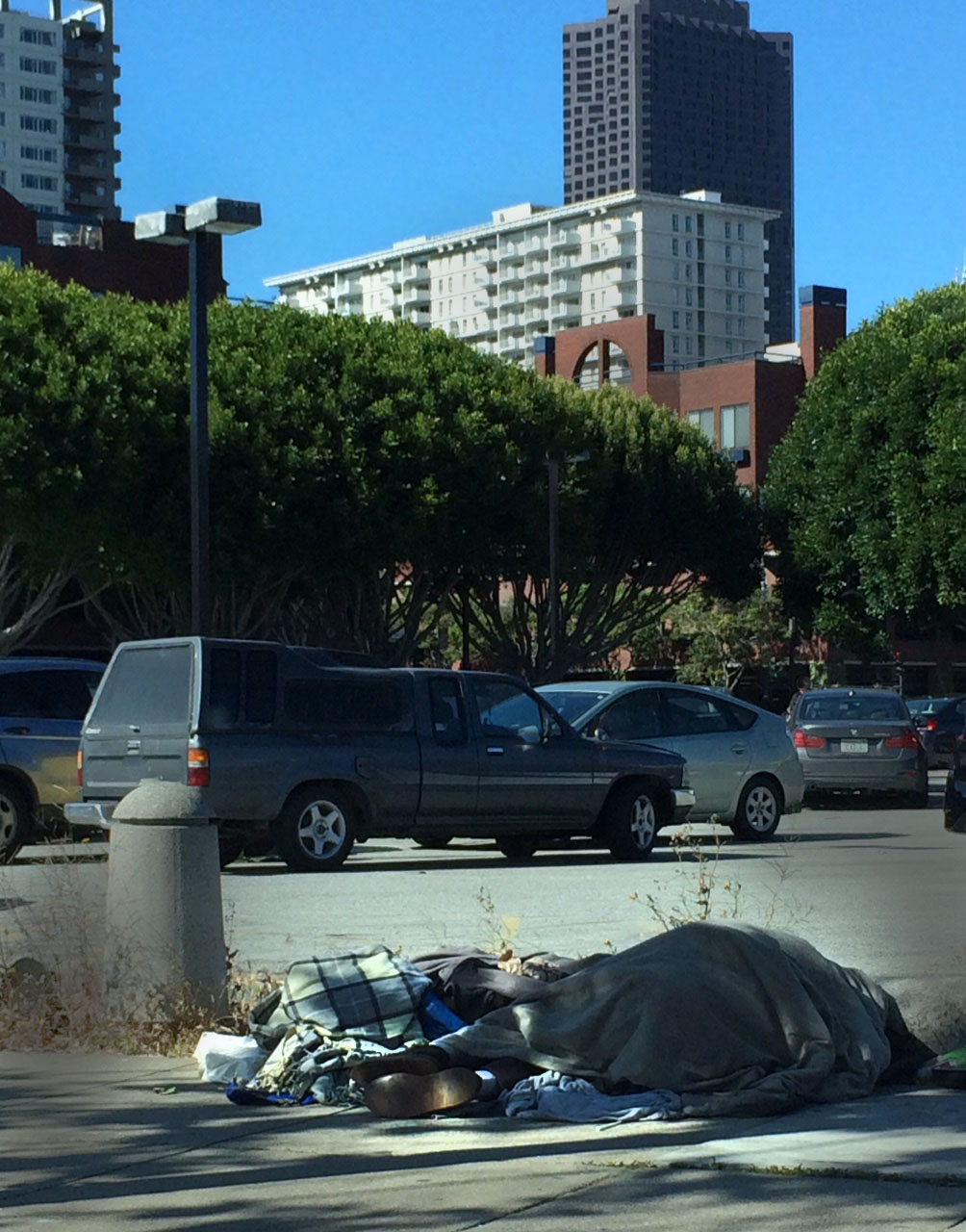
Not so beautiful to the thousands of families burnt out of their homes or flooded only to be stiffed by the insurance companies and an underfunded FEMA who who do not care for them.
Not so beautiful to the three million Americans in Puerto Rico who don’t have electricity or enough food.
Not so beautiful to bicycle riders who get run over by drunks who the law allows to keep driving our roads.
Not so beautiful to the 50,000 Americans killed each year by gun fanatics who can’t get the mental healthcare they need.
Not so beautiful to the sick and dying Americans who suffer a lack of healthcare so the rich can buy new summer homes.
Not so beautiful to the millions of immigrant children thrown in jail and deported back to a country they hardly know.
Not so beautiful to American women who face discrimination and sexual harassment on the job and at home.
Not so beautiful to people of color who face racism every day.
Not so beautiful to American citizens threatened with nuclear war by a president too narcissistic and too sociopathic to face reality.
Not so beautiful to the people who are not rich enough to afford the lies the rich tell themselves about how beautiful they imagine America might be.
And it wouldn’t be so beautiful to Jesus Christ. He threw the rich moneylenders out of the temple, when they sold their souls for such riches.
And it wouldn’t be so beautiful to Martin Luther King, Jr. to hear that his dream has not become true.
Not always so beautiful to me.
When the Star Bangled Banner plays, I kneel out of respect for the human dignity and justice this country no longer offers.
I look at her hands
on my hands
on her stomach.
A baby.
I hope to see
into the future,
but all I see is
the basket of shadows
the lamplight makes
of our fingers.
It bothers me: the genital smell of the bay
drifting toward me on the T stop, the train
circling the city like a dingy, year-round
Christmas display. The Puritans were right! Sin
is everywhere in Massachusetts, hell-bound
in the population. it bothers me
because it’s summer now and sticky – no rain
to cool things down; heat like a wound
that will not close. Too hot, these shameful
percolations of the body that bloom
between strangers on a train. It bothers me
now that I’m alone and singles foam
around the city, bothered by the lather, the rings
of sweat. Know this bay’s a watery animal, hind-end
perpetually raised: a wanting posture, pain
so apparent, wanting so much that it bothers me.



 davidkrancher.com