
For $12,000 you can get Geoff Dyer to show you how to finish a manuscript. You’ll have to jet to the UK and sit in a classroom for nine months. If all you ended up with was a meandering text-vacation through a Dyer-like brain, was it worth it? For my money nothing exceeds the process of putting ass to chair, pen to paper, and heart to mind. Of course, it won’t get you an advanced diploma in creative writing from UEA, The University of East Anglia, but I don’t remember Scott Fitzgerald needing one to explore his ambition or Willa Cather to explore her American frontiers. The next novel I read had better be something unlike anything I’ve read before. Anything like anything is a waste of time to me. I don’t even like to read fine writers who tend to repeat themselves too much. Someone once said a writer has one basic story to tell. This may emerge through many novels, but still a good writer will make each one new. Whether it’s a muse or a certain gut-feeling that propels the writer, I want, as the reader, to be able to touch that spirit in some way as I read. There should be music between those lines—can you find that in classroom?
Against Any Theory of Literary Theories
Coming to any conclusion regarding the value of any particular literary work or group of literary works against any other standard, whether it be an educational, political, or economic one, is simplistic and ludicrous. It’s as intelligent as rating the quality of paintings by the total number of brush strokes.
Let’s see, that’s Rembrandt with 11,534 strokes versus Jackson Pollock with 0. Or to make a literary comparison: it’s Tolstoy with 450,000 words versus Emily Dickinson with 3,250. Now, how fun is that? But if you want to keep warm during a Boston winter while avoiding news of American deaths in Afghanistan, read War and Peace and feel smug against the comparison with Moscow and Napoleon. If you want your brain to toy with the many times your feelings have reacted to a snake in the grass, read Dickinson’s poem about it. The joy Tolstoy and Dickinson had it creating those writings is there for all to read again and again. There is no way to create a definite product from that, but readers do keep coming back to it.
Ultimately, art cannot be put into any box besides its own creation. It is profoundly anti-establishment, anti-ideological and of course, anti-narrow-minded. Marjorie Garber says: “Literature is a process rather than a product, and if it progresses, it does so in a way that often involves doubling back upon a track or meandering by the wayside rather than forging ahead, relentlessly and single-mindedly, toward some imagined goal or solution.”
Of black and white black white black people— Langston Hughes
Daybreak in Alabama
by Langston Hughes
When I get to be a composer
I’m gonna write me some music about
Daybreak in Alabama
And I’m gonna put the purtiest songs in it
Rising out of the ground like a swamp mist
And falling out of heaven like soft dew.
I’m gonna put some tall tall trees in it
And the scent of pine needles
And the smell of red clay after rain
And long red necks
And poppy colored faces
And big brown arms
And the field daisy eyes
Of black and white black white black people
And I’m gonna put white hands
And black hands and brown and yellow hands
And red clay earth hands in it
Touching everybody with kind fingers
And touching each other natural as dew
In that dawn of music when I
Get to be a composer
And write about daybreak
In Alabama.
Agent, Molly Friedrich, from Poets & Writers
Here’s an excellent interview from Poets & Writers with the agent, Molly Friedrich. It’s an in-depth view of the world from one of the best agents in the publishing business. Enjoy.
Kay Ryan wins the Pulitzer for her poetry
Just because she won the award, it doesn’t mean she isn’t a fine poet. She won the Pulitzer for “The Best of It: New and Selected Poems.” This is one of her poems:
THINGS SHOULDN’T BE SO HARD
A life should leave
deep tracks:
ruts where she
went out and back
to get the mail
or move the hose
around the yard;
where she used to
stand before the sink,
a worn-out place;
beneath her hand
the china knobs
rubbed down to
white pastilles;
the switch she
used to feel for
in the dark
almost erased.
Her things should
keep her marks.
The passage
of a life should show;
it should abrade.
And when life stops,
a certain space—
however small —
should be left scarred
by the grand and
damaging parade.
Things shouldn’t
be so hard.
“Things Shouldn’t Be So Hard” from The Niagara River by Kay Ryan, Copyright © 2005 by Kay Ryan. Used by permission of Grove/Atlantic, Inc.
How to learn to learn to write
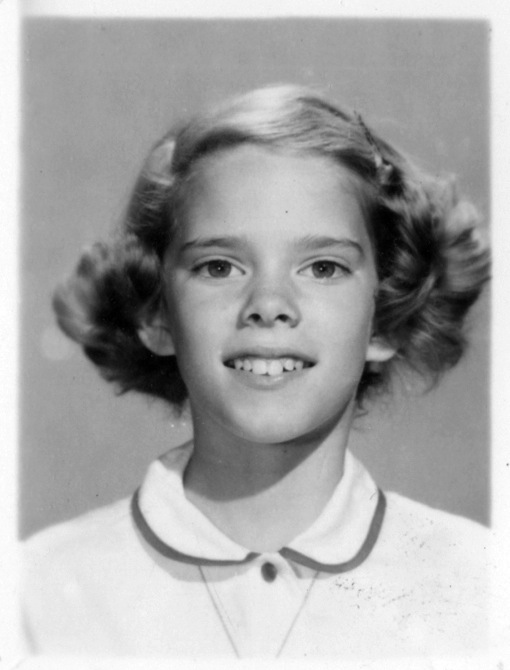
Two Girls Invent a Spring Day
(for Charlotte)
A mommy, a doggie, a soccer ball, and two three-year-old girls.
One kicks it to the other and she runs away as if chased by it.
One kicks it to her again and she jumps over it twice as it rolls.
The other, tired, says new rule: kick it to yourself so I can sit.
New rule: I kick the ball to the doggie and I sit, too.
New rule: you stand on your head. I stand on my head.
New rule: the doggie should stand on his head.
Look at the doggie and giggle. Look at the sky and giggle.
New rule: when the doggie runs away, I kick the ball at him.
New rule: you have to giggle when you run.
Uh-oh, Mommy calls. Kick the ball to the far corner so
she has to run after it. Laugh at Mommy as she kicks the ball.
Kick it back to the corner again. Laugh at Mommy again.
If I could imaginate like these girls, I wouldn’t
have to walk across a park to a library
to get a book full of it: I’d kick a ball. I’d run.
I’d stand on my head. And I would laugh at Mommy.
 davidkrancher.com