February 22, 2012

David Krancher's avatar

For three minutes of a haunting and brilliant writing listen to Kimberly Elkins’ “Laura Bridgman” on The Drum, an audio literary magazine.

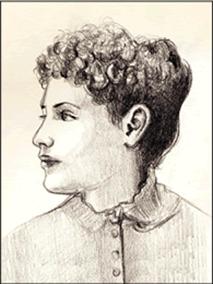
Her flash fiction “Laura Bridgman, the First Famous Blind Deaf-Mute, Aged 59, Upon Meeting Helen Keller, Aged 8” was recorded at The Drum’s Open Mic session at the 2011 Boston Book Festival and appears in the November 2011 issue of The Drum.

Kimberly Elkins’ “Laura Bridgman” offers a fascinating fictionalized account of an actual historical moment. It’s from her newly completed first draft of the novel (Yay, Kim!). As Laura meets the young girl (Keller) who is being groomed to take her place as a celebrity, Bridgman muses on the vagaries of fame and reputation. Elkins’ piece raises interesting questions about the rivalry among the senses (or their loss), and the strange power that can be wielded by disability.

This piece from her novel may either be part of a…

View original post 167 more words

February 15, 2012

Notes on Being an Artist

How My Writing Frees Itself

A talented young writer recently asked me for some support and I dashed off a letter to her and I tried to explain, just how I, myself, managed to keep working day after day, and year after year. That inspired me to come up with a list of ways I support myself. This is my list:

• The more I become myself as an artist, the less I ask other people how or what I should write.
• What other people think about my writing is not important.
• What I think about my own writing, is not that important.
• Each day I sit down and tell my mind to shut up. I sit quietly for twenty minutes and then write what my inner self guides me to. It asks me to consider very difficult things in my own life, my thinking, and in my memories. That’s as it’s supposed to be.
• I hope my writing is a sharing from my most honest self. If I don’t have that in me, I’ll never share much value as an artist.
• I don’t think being an artist is easy: that I’ve had a difficult life so far, is to my advantage. It’s made me quite human, and that’s all there is to write about anyway.
• An artist’s sensitivity is all he or she is. In one sense a true artist is the bravest kind of person. No one wanted to hear Jesus say “love your enemy,” that was too brave. No one wanted to hear Buddha say: “Give up all your money, the only value is spiritual.” Neither one published anything, but we have to read their words all the time because they got the voice right. It’s an inside job, I’m afraid.
• I look in the mirror and I can tell myself one great fact: “I did not give up on myself—I love that about me.”
• I don’t listen to anyone who tells me what I should do with my art. I don’t even listen to myself, because many of those voices I hear in my head are only echoes of negativity that have been doing their push-ups for many years.
• Be unique, be yourself, be weird, be fabulous. I don’t have to try to do that, I just let myself go.

February 2, 2012

How I Create History within a “Live” Story

How I Create History within a “Live” Story . . . or How I Create a More Intimate Close-Third-Person Point-of-View

I’m rewriting a novel of mine to try to create a style that brings the reader closer to the heart of my story. The story is told in both first-person and third-person point-of-views, using what James Wood calls the “free indirect style,” which is also called “close third-person.” The problem that arose with the story is that there seemed to be too much distance between the first-person narrator and the third-person narrator. In the first case the reader lives in the action and the mind of the main character. In the third-person case my first draft has the narrator standing well back from the present scene and also standing well back in time (as if he was telling stories from his youth, which he is doing as a device for the tale). This works on some level because it’s a historical novel and the “story” is written from the journals of the first-person narrator. On another level, as the story unfolds, there is a disconnect between the “alive-ness” of the story as told by the first-person voice and the dispassionate voice of the third-person narration. The effect produced in this contrast could be almost one of boredom, I’m afraid—that the third-person voice gets in the way of the story.

For me, it is a lot of work to change a mode of writing I’ve used for many years now. It does not seem to come intuitively. At least not yet. I’m removing any judgmental language and I’m removing anything that relates directly to a time-period outside of the action. Is there anything you do in a novel to relate complex action to its time period without sounding like some documentary narrating voice?

January 22, 2012

Writing Novels Is Simple, If You Like Simple Novels


A new writer recently protested while writing his first novel that he frequently felt disgusted and incompetent. He felt that perhaps he should give up—that he didn’t feel “normal” enough to be a novelist. My response was this:

Who told you writing novels was easy? Writing is like life, but more intense—like a life that if all you do is ride a ferris wheel crossed with a roller coaster that breaks down a lot and the only mechanic you know can only be accessed by psychic smoke signals and the only ink available consists of your own blood mixed with stomach bile and the sweat off your back.

It is like that, but it’s also harder than that for a true artist who writes. Also, it’s more fun than real life sometimes because you get to make it all up from your own imagination, although if you don’t have one of those, give up right away. It’s all those hard, sad times that make the good ones so great. Also, it makes for a unique book, and that’s the main point. If it feels like nothing else you’ve ever felt or read, pat yourself on the back—you have arrived. Enjoy the ride.

January 15, 2012

The Work of Writing and Friends

The Work of Writing and Friends

WORK IS MEMORY: I was reminded by a writer friend of mine today about the struggle to work at writing when it is going poorly or not at all. It is an easy reminder for me because mine has not been going well recently. You can tell by my increased attention to my website here. I was also reminded by an opinion piece in The Times. Susan Cain writes: “One explanation for these findings is that introverts are comfortable working alone—and solitude is a catalyst to innovation. As the influential psychologist Hans Eysenck observed, introversion fosters creativity by “concentrating the mind on the tasks in hand, and preventing the dissipation of energy on social and sexual matters unrelated to work.” What did help me today was offering my time to help her by remembering my own experience earlier in my own career.

WORK IS PRACTICE: The best thing you can do is show up for it every day, because like any art, much of it takes place between sessions at the page and much of it takes place in the subconscious. I just wrote a paragraph about my main character in my Cuban novel where he imagines that his skin has turned dark overnight. It’s actually the first night he spends together with Tesora, and the vision signifies to him how shallow his prejudice against Africans had been: his mind is blown and his skin is now brown.

WORK IS CRITICISM: Yes, it’s hard to take criticism, but writing is a form of conversation, so feedback is important. Someone once said that whenever someone tells you a piece of your writing doesn’t work, the critic is probably right—at the same time that person, when they tell you how to fix it, they’re almost always wrong. You must stick to that inner self who knows the truth, whatever that is. Take time to sit quietly every day to listen to your inner voice (don’t worry if it sounds exactly like silence). No one can read the vision behind the piece you write.

WORK IS LISTENING: And to show up every day, is also to be a part of that audience yourself. You change and your point of view changes a bit every day, so you can be a better critic for yourself. One of my critics, a young Japanese woman, who writes urban fantasy, is someone I picked who would be far from my own point of view, certainly. She expects a whole different thing from writing—more present-tense action. Me, I think action is best emphasized by pauses, like music uses it to produce rhythm and cadence. I still enjoy reading books who were born in the 1800s. Plus, I have a propensity to enjoy and accomplish a certain lyricism. I enjoy reading it, and I enjoy creating it, too. So way to hang in there, writers: who told you writing was easy?  It’s simple enough; you just stare at the page until blood forms on your forehead: no problem.

WORK IS COLLABORATING: Writing with a partner right there at your side can be helpful too. For a whole year, once a week, I trekked down to the Reading Room of the Boston Public Library and met a friend and we both wrote for a few hours and then had tea to congratulate each other. It was a wonderful way to learn how to show up for the work. Writing regularly helps you to feel good about yourself, even when that time is not a big number. Other things always get in the way: keep writing and feel good about that. I wrote much of one novel commuting on a bus, surrounded by black high school kids yelling and blasting music. At first I thought it would be impossible to write like that, but then it just became part of my routine like the Boston Public Library. Years later it gave me the idea for my last novel with the plot involving a Scottish boy marooned in an all-African Cuban town. Did you ever hear the phrase, “acceptance is the answer to all my problems”? That also applies to writing as well.

January 13, 2012

Wise Blood a Novel by Flannery O’Connor

When it occurred to me I’d never read Wise Blood by Flannery O’Connor, I felt I’d be missing something if I didn’t. I’d read a book of her short stories and saw the movie of Wise Blood long ago so perhaps I imagined I’d read it. I’d never knowingly substitute the movie for the book. It is an amazing book. A minor annoyance is wading through the dialect-spellings she uses, but beyond that the book is a marvelous mix of clear writing and language with its impenetrable yet vivid characters.

Well, the characters are impenetrable at first, but also beautifully whole and unique. Mostly, though, they are as mesmerizing in themselves as mysteries which need solving. She does not supply easy answers for that. Through all this she creates a world both of this world and apart from it. I cannot put it down (except to write this review). The story has so taken root in my head, I couldn’t think of another book to mention from the past year.

January 1, 2012

Two Means of Swan by Alfred Lord Tennyson and Camille Saint-Saens

Two Means of Swan by Alfred Lord Tennyson and Camille Saint-Saens

The music and the poem:

The Dying Swan

by Alfred Lord Tennyson

I.

The plain was grassy, wild and bare,
Wide, wild, and open to the air,
Which had built up everywhere
An under-roof of doleful gray.
With an inner voice the river ran,
Adown it floated a dying swan,
And loudly did lament.
It was the middle of the day.
Ever the weary wind went on,
And took the reed-tops as it went.

II.

Some blue peaks in the distance rose,
And white against the cold-white sky,
Shone out their crowning snows.
One willow over the river wept,
And shook the wave as the wind did sigh;
Above in the wind was the swallow,
Chasing itself at its own wild will,
And far thro’ the marish green and still
The tangled water-courses slept,
Shot over with purple, and green, and yellow.

III.

The wild swan’s death-hymn took the soul
Of that waste place with joy
Hidden in sorrow: at first to the ear
The warble was low, and full and clear;
And floating about the under-sky,
Prevailing in weakness, the coronach stole
Sometimes afar, and sometimes anear;
But anon her awful jubilant voice,
With a music strange and manifold,
Flow’d forth on a carol free and bold;
As when a mighty people rejoice
With shawms, and with cymbals, and harps of gold,
And the tumult of their acclaim is roll’d
Thro’ the open gates of the city afar,
To the shepherd who watcheth the evening star.
And the creeping mosses and clambering weeds,
And the willow-branches hoar and dank,
And the wavy swell of the soughing reeds,
And the wave-worn horns of the echoing bank,
And the silvery marish-flowers that throng
The desolate creeks and pools among,
Were flooded over with eddying song.

December 28, 2011

How Bravery Failed in Hemingway and Fitzgerald

I just finished re-reading A Moveable Feast, by Hemingway. The edition is one that was restored from its earliest version but it does not restore Hemingway himself to “Great Writer” status. The novel or memoir (or both) tells tales of writers in Paris in the 1920s without the humor or drama that Woody Allen does in “Midnight in Paris.” To me, his short work such as The Nick Adams Stories show an early brilliance that his novels and later work could never match. In Moveable Feast you can watch him wobble between that brilliance and his clumsy attempt to bully his way through the story.

Two topics: one each about Ezra Pound and Gertrude Stein are the best of the bunch. In these two he does not appear to be in direct competition with his subjects. To Hemingway, it would seem, Stein is a woman so she offers no macho competition though she is easily his intellectual equal and mentor. And Pound is merely a poet who cannot match Hemingway in a boxing ring, so he requires no bullying either. In the section on F. Scott Fitzgerald, however, you can see how hard he competes. Most of the section is wasted with Hemingway spending too much time arguing how much worse a drinker is Scott than himself. Who wins that one? And who cares? Where are the great chats about writing we hope for? There one delightful small chapter on his use of first-person narrative, but it only highlights the lack of writerly tales.

Hemingway finally admits how “fine” a novel The Great Gatsby is, but he tags that with the prediction that because of Zelda, Fitzgerald could never match it after that. While it’s true that Fitzgerald never equaled that novel, it was not because of Zelda. According to Hemingway’s own statements that period of his own life also saw the dissolving of his marriage to Hadley, but you won’t find any of that in the text. The worst of it is a tedious discussion between the two men about the size of Scott’s manhood, the sub-text implication behind the story is the opposing size of Hemingway’s pen. Apparently, Hem had never heard the expression, T.M.I. and neither had his publisher. Finally, however, what felled Fitzgerald was also what felled Hemingway—a lack of writerly courage—which they covered up with their use of alcohol. Neither won that battle, and as their readers, neither do we.

I wish I could hold in my mind the foggy memory that I had after the first reading of the book (it was the sixties, you know) rather than have it sullied by this rereading. Something every reader knows is that fiction creates the best memories, so I will choose to “remember” Paris in the 1920s as Woody Allen has dramatized it in “Midnight in Paris.” Memory has always been my own best editor to me in life, but I pray never to be above any good editor of my own writing.

December 15, 2011

“Neither a panster nor plotter be —be both.”

Whenever a writer of fiction leaps into the unknown of a new story, he must ask himself whether he is a plotter or a panster. A panster does not plot, but allows the story to flow on wings of imagination. Whether it is nobler in the mind to suffer the slings and arrows of imagination’s flying air force and let my pen roam free, or to allow the ropes of reason to dictate laws to bind my pen to the bulleted list and follow the one, two, three . . . who knows which is best? And when?

Sometimes as I write, I want to be a million miles away from any plotted plans. Other times I type red numbers into the text to keep track of events or character blocking marks. Any outline bit that occurs to me, I jot down for reference. I also feel free to cross them out or delete them as the story rolls past their limited views of imagination. Usually, there will be one or two good ideas left in a list of ten items that make the final cut. I do however believe that I wouldn’t have found the one or two good ones unless I had made that list of ten. Doing a second or third draft brings me more strongly to use definite plot points to guide me. When the laundry is dry on the line it is easier to reel in—in other words, during a rewrite I’m less invested in some of my sentences and more concerned with the flow of story, so it’s easier to re-arrange (or cut) paragraphs and sections of text. I don’t follow the rules, but I keep a wary eye on them lest they bite my book.

December 13, 2011

Read the pages that Shakespeare, Beethoven, and Galileo saw.

I found this Website from Octavo, rarebookroom.org, that brings us into all the best rare book rooms of the world. You can read the same type that our earliest writings, scholars, and musicians wrote and read. You can read Books of Hours, medieval and Renaissance illuminated manuscripts; check out Galileo’s notebooks; and study charts of Copernicus about how he proved the truth about the solar system. Of course Octavo hopes you’ll buy some limited edition reprints of these, but if you can’t afford them, you certainly can’t afford not to check it out on your computer. The reality of these pages makes the type fonts on any computer screen look lame and pale by comparison, and something of the spirit of those times is transferred to the reader.

Octavo says, for instance: “Over the past several years in cooperation with the world’s greatest libraries, Octavo has digitally photographed most of the existing early quarto editions of William Shakespeare’s plays and poems, as well as the quarto editions of plays such as The Yorkshire Tragedy once considered part of the Shakespeare canon.”

You can explore the earliest texts here.