
In a review in The NY Times it says that Esmeralda Santiago’s “Conquistadora” is a novel about a Puerto Rican plantation mistress. It’s set in mid-19th-century Puerto Rico. Puerto Rico was one of the last holdouts for slavery in the Americas, ending it in 1873, although slavery in Cuba wasn’t abolished until 1884. The novel’s heroine ends up a widow running a sugar plantation who becomes romantically involved with an overseer. She is a heroine, however, of mixed reviews: she was not above having her slaves tied to a tree and whipped when it profited her.
http://www.nytimes.com/2011/07/17/books/review/book-review-conquistadora-by-esmeralda-santiago.html
July 15, 2011
Esmeralda Santiago’s “Conquistadora” —a Puerto Rican Plantation Mistress Strikes Out
July 8, 2011
Ronan’s Stolen Gold Meets the Pirates Who Once Owned It
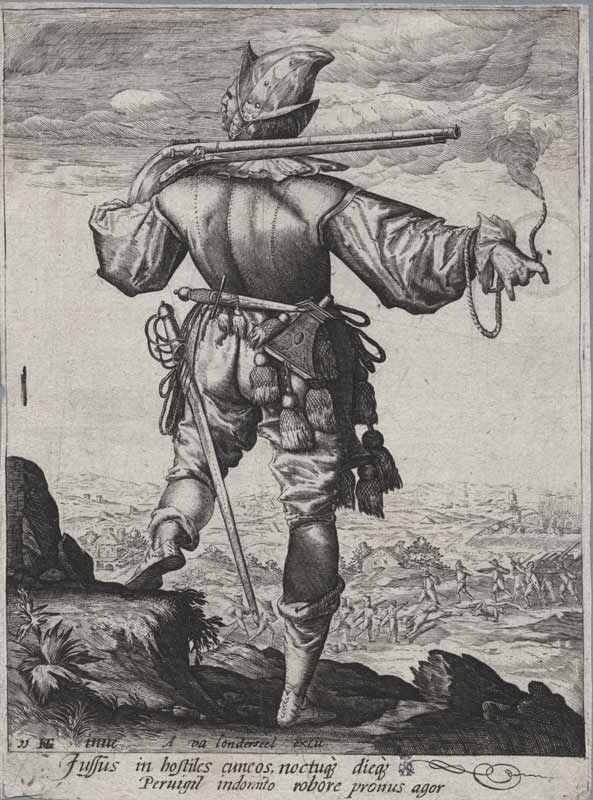
The main character from Tesora, Ronan, is confronted by three pirates. They once sailed the pirate ship which supplied Ronan with his traveling money (gold coins). They appear in his town to get the money back. They carry muskets like the one pictured below. They also walk the same swagger as this musketeer. They count on Ronan being young and afraid—they don’t count on his support from the folk in Puerto Toque.
June 16, 2011
“Book sales are up, way up, from twenty years ago.”
McSweeney’s has some positive notes on the state of publishing today. Here. They say: “Book sales are up, way up, from twenty years ago. Young adult readership is far wider and deeper than ever before. Library membership and circulation is at all-time high. The good news goes on and on.” Of course all that takes place with everything else about the industry in a total state of change. Cool.
June 9, 2011
Real pirate treasure is shown is this slide show.
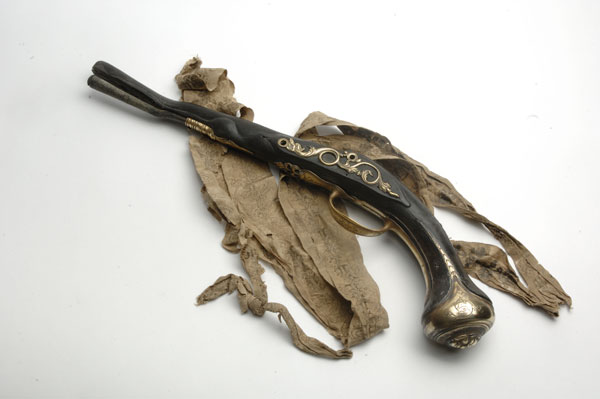
Real pirate treasure is shown is this slide show. Click this link:
June 7, 2011
My ten favorite rules for writing fiction
My ten favorite rules for writing fiction
(Partly derived from: this Guardian article which includes the “Top Ten” lists
the authors: Elmore Leonard, Diana Athill, Margaret Atwood, Roddy Doyle, Helen Dunmore, Geoff Dyer, Anne Enright, Richard Ford, Jonathan Franzen, Esther Freud, Neil Gaiman, David Hare, PD James, AL Kennedy)
The List:
1. The most important thing in fiction is sincerity: don’t fake it.
2. If it sounds like writing, read it out loud, then rewrite it.
3. Feel your anxiety—it’s an important part of the process.
4. Keep a grip on reality with a good meditation practice.
5. Read. Read all the best books: look them up.
6. Most writers don’t know how to use an em-dash: look that up.
7. Spend most of your time not writing. Readers don’t care about words,
they want to hear your imagination speak.
8. Don’t be afraid to change your mind. Kill good ideas with better ones.
9. Never fall in love with your own writing.
10. Write a book you’d love to read.
June 5, 2011
A rare picture of Tesora using an early 17th Century camera.
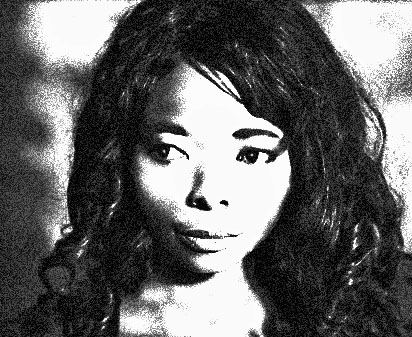
A rare picture of Tesora using an early 17th Century camera.
May 31, 2011
Roddy Doyle: A life in writing, an Interview by Sarah Crown
Here is a excerpt from an interview with Roddy Doyle given by The Guardian. The interview details an in-depth portrayal of the life of his novel, Paula Spencer. This shows a fearless writer at the top of his game as he struggled to create a character far from himself, yet he created a character who needed to emerge. This character is also perhaps his greatest achievement.
“. . . the most difficult thing he’d ever attempted. The Woman Who Walked Into Doors took the character of Paula Spencer – alcoholic, careening, desperate but still stubbornly clinging to her life – and produced a bleak, brave book that is widely held to be his finest creation. “Writing an alcoholic woman was hard,” he says. “Biology and circumstances put me a long way from her. It was a very slow piece of work at first. It took me a long time to get the register. Then in the second year, it began to click. Chapter 25, the longest one, the emotional heart of the book – it took just two days to write; it flowed out of me. By that point, I knew exactly what I wanted to do.”
“In chapter 25, Paula recalls the first time Charlo hit her, when she was pregnant with their first child. “I fell,” Paula says, “He felled me. I’m looking at it now. Twenty years later. I wouldn’t do what he wanted, he was in his moods, I was being smart, he hated me being pregnant, I wasn’t his little Paula anymore – and he drew his fist back and he hit me. He hit me. Before he knew it? He drew his own fist back, not me. He aimed at me. He let go. He hit me. He wanted to hurt me. And he did. And he did more than that.” The stiff, fractured sentences and hammering repetitions convey the brutality of Paula’s marriage, and the mental excisions she has had to perform to survive it. “It is the triumph of the novel,” Mary Gordon wrote in the New York Times Book Review, “that Mr Doyle – entirely without condescension – shows the inner life of this battered housecleaner to be the same stuff as that of the heroes of the great novels of Europe.”
—Roddy Doyle: A life in writing, by Sarah Crown.
 davidkrancher.com