November 17, 2011
A mashup is, of course, the putting together (or mashing) of separate elements to create a whole unique piece of art. The term is usually used in music and was pioneered by Hip Hop which uses it extensively. Has it ever been done successfully with a novel? Will I try to achieve that?
I’ve got two projects: 1. a once-finished novel that is “trunked” or out of circulation, and 2. An early work-in-progress, WIP, with two new characters but no structure. Novel 1, I’ve found is a mess because when I indulgently tried to insert the character of my Ex into the narrative and when the 3rd person POV of the novel tried to read her mind . . . it failed. The best I could do at the time was take out all that material (12k words), but now I’ve got a story like a 3-legged table. My proposal would be to create a mashup by inserting a new character from the WIP in its place. I’ve never done anything this radical before. I’m not sure how inserting new material into an older narrative would work. It’s not a traditional mashup, if there is such a thing, but it would be a challenge. It’s a method to consider.
Posted in About Fiction, About My Novels |
Leave a Comment »
November 12, 2011
I might be a dead string now, but I don’t want to be. I don’t want to die alone. I don’t want to die before I’ve had a chance to live on my own. I want someone, anyone, someone real, to know who I am at last. I want to sing so that someone feels me, hears my voice. I want to sing out like Jimi Hendrix played and play guitar like Janis Joplin sang. I want that someone to listen and then put his head down and cry. Then I will know.
Posted in About My Novels, Poetry |
Leave a Comment »
November 6, 2011
As my upper mind digests my unconscious mind in search of the next right story, my curiosity throws me full-tilt into some music to latch onto. I know my new novel is going to involve music so my guitar has been dusted off and I’m practicing as if I will soon get back on stage to torture the ears of Cambridge. I am also searching for the inspiration in a female character to feature in the plot. I think I’ve found her. She is Nina Diaz of Girl in a Coma. Her new album with the band is called “Exits and All the Rest” and is just out. If you hurry over to NPR site here, you’ll get a listen to the whole album. It should still be us for a few days. After that, you could buy it or search on YouTube. I’ve heard it several times now, and am learning to play and sing “Smart,” a cut from the album. She writes: “And do you ever start to wonder / what’s it like to be alone / to sit and stare and ponder / living a life that’s not your own?” That’s a good question to hang a song upon—and perhaps one appropriate for a novel. We shall see. Enjoy—and keep bugging me to start and finish the novel.
Posted in About My Novels, About writers |
Leave a Comment »
October 27, 2011
If I fly, I do not know where
If I walk, not knowing who I am
if I speak, and the voice sounds with the morning
I know . . .
If I drink this light that goes out on me at night,
And if one day I say I no longer want to be here,
Only God knows what he saw,
Only God knows what will be,
There is no other who knows everything that happens to me.
If sorrow is deeper than the pain
If this is no longer the flavor
And to think that all this already I thought
I know . . .
If I drink this light that goes out on me at night,
And if one day I say I no longer want to be here,
the uncertainty of knowing what to do, what to want,
Even without ever thinking that one day you’ll think
There is no other who knows everything that happens to me.
[link to song is here: I Know, a song by Sara Tavares]
Posted in About My Novels |
Leave a Comment »
October 26, 2011
I’m getting towards the end of an edit of the Joe Island novel. Throughout the arc of the story there are a succession of occupiers of Greece: Italy, Germany, Britain, and then the USA. Each occupier thinks they are unique, but each operates to force the people of Greece to support its own agenda. And so the death-squad system used by the Nazis becomes adapted by the Americans by default. The USA says it only wishes to stop communism—the Greeks say they want to stop dying for American sins, that they want their own country back. They want to be free of the type of colonialism Americans fought in 1776. Is Joe a psychological colonialist, or is he simply a man without a country?
Posted in About My Novels |
Leave a Comment »
October 13, 2011
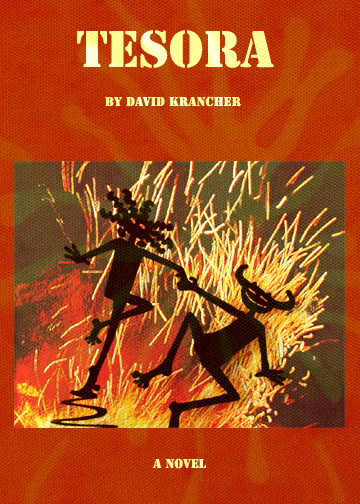
When I read about this novel, I struck by some of its similarities to my own most recent works, Tardy Son and Tesora. I read an excerpt from his latest novel to find out. But I found that it’s all written from a remote adult’s POV with indulgent explanations about the boy with very little emotional or psychological understanding of him. That may have been all right with The English Patient, but not with this one. Instead of the writing being alive like a teenaged boy is, it’s petrified and dusty and conclusive. Life for a boy of that age might be dangerous in this situation, but it is not boring. He doesn’t seek out answers ontologically. A boy looks for gold and squished bugs and is obsessively optimistic.
It seems the closer a subject is to mine, the further the writing is apart from my style. Here’s a link to a NYTimes review of his new novel.
Posted in About Fiction, About My Novels, About writers |
Leave a Comment »
October 2, 2011
Grocery List
Two grapefruit, large.
One bunch of basil, small.
Twelve potatoes, Yukon Gold.
Five novels, juvenile.
One partridge in a pear tree.
Posted in About My Novels, Poetry |
Leave a Comment »
October 1, 2011
How to create dark humor:
The main character in my novel has wartime trauma and is attempting a voyage in a rubber raft. He was once a bomber pilot, so he has a certain quality of leadership skills he can use on himself. On the other hand he is trying to escape from the evil in his own mind and cannot conceive of how to do that. Perhaps this gives me the opportunity to create some wild flights of imagination to play out in his mind. They contain scenes of an idyllic childhood juxtaposed with scenes from the darker scenes he remembers from literature. He is obviously attempting to avoid his own memories, but I would like to know if these flights need to be funny out loud, or does being merely ironic work for him?
Posted in About Fiction, About My Novels |
Leave a Comment »
September 27, 2011
Posted in About My Novels |
1 Comment »

 davidkrancher.com